Automotive Telematics Device
Automotive-grade telematics system for police vehicles with driver behavior monitoring, vehicle tracking, and real-time diagnostics
Project Overview
Designed and developed a comprehensive automotive-grade telematics device for deployment in police vehicles across the UAE. This mission-critical system enables real-time vehicle tracking, advanced driver behavior monitoring, comprehensive vehicle diagnostics, and secure data transmission to central police servers. The device features extensive I/O capabilities to interface with existing and new vehicle systems, making it a complete solution for fleet management and law enforcement operations.
Final Production Board


Key Features & Functionality
Driver Behavior Monitoring
- Harsh Braking Detection: Real-time monitoring and logging of sudden braking events
- Harsh Turning Detection: Analysis of aggressive cornering and lane changes
- Acceleration Patterns: Tracking of rapid acceleration and aggressive driving behaviors
- Speed Monitoring: Continuous speed tracking with threshold alerts
- Behavioral Analytics: Comprehensive data collection for driver performance assessment
Vehicle Tracking & Diagnostics
- Real-time GPS Tracking: Precise location monitoring with high update rates
- OBD-II Integration: Full vehicle diagnostics and fault code reading
- Self-Diagnostics: Continuous health monitoring of the telematics device itself
- Data Logging: Comprehensive event logging with timestamp and location data
Communication & Data Transmission
- Multi-band Connectivity: GSM/GPRS/5G support for reliable data transmission
- Wireless Connectivity: Wi-Fi and Bluetooth support for local communication and device configuration
- Secure Server Communication: Encrypted data transmission to police central servers
- Real-time Alerts: Immediate notification of critical events
- Data Synchronization: Automatic data upload with retry mechanisms
System Integration
- Extensive I/O Capabilities: Multiple digital and analog inputs/outputs
- Device Control: Interface with existing vehicle systems and new installations
- Modular Design: Expandable architecture for future feature additions
- Standard Interfaces: CAN bus, UART, I2C, SPI for flexible integration
Technical Implementation
Hardware Architecture
PCB Design:
- Multi-layer Design: 6-layer PCB using Altium Designer
- High-Density Layout: Optimized component placement for compact form factor
- Power Distribution: Dedicated power planes for clean power delivery
- Signal Integrity: Controlled impedance routing for high-speed signals
Core Components:
- Main Microcontroller: ESP32 System on Chip (SoC) featuring dual-core 32-bit Tensilica LX6 processor running at up to 240 MHz, with integrated Wi-Fi (802.11 b/g/n) and Bluetooth 4.2/5 (LE) connectivity
- Cellular Communication Module: Quectel EC200U based on Unisoc UIS8910DM SoC with integrated ARM-based processor core (programmed with MicroPython) for GSM/GPRS/5G connectivity
- Communication Modules:
- GPS module (NEO-6M or equivalent) with external antenna support
- Interfaces:
- CAN bus transceiver for OBD-II communication
- Multiple UART, I2C, and SPI interfaces
- GPIO expansion for device control
Power Management:
- Wide Input Range: 9-36V DC automotive input with reverse polarity, ESD, surge current, and overvoltage protection, with auto-run when car is on and auto-sleep when car is off
- Efficient Conversion: Buck converter for main power, LDO regulators for sensitive circuits
- Power Monitoring: Real-time current and voltage monitoring
- Low Power Modes: Intelligent sleep/wake-up for extended operation with auto-run when car is on and auto-sleep when car is off
Critical Design Challenge: Thermal Management
Problem Statement: The extreme temperatures in the UAE (reaching 50°C+ ambient, with vehicle interior temperatures exceeding 70°C) posed a significant challenge for reliable operation of the electronic components.
Solution Implementation:
- Component Selection:
- Selected automotive-grade components rated for -40°C to +125°C operation
- Used high-temperature capacitors and resistors
- Specified extended temperature range ICs
- Thermal Design:
- Strategic placement of heat-generating components
- Thermal vias and copper pours for heat dissipation
- Adequate spacing between high-power components
- Thermal simulation and validation
- PCB Layout Optimization:
- Maximized copper area for heat spreading
- Thermal relief patterns for component pads
- Proper via placement for heat conduction
- Enclosure Design:
- Ventilation considerations
- Heat sink integration where necessary
- Material selection for thermal properties
Results Achieved:
- Successfully operated in ambient temperatures up to 55°C
- Maintained component temperatures within safe operating limits
- Zero thermal-related failures in field deployment
- Extended device lifespan in harsh environmental conditions
Protection & Reliability
- Reverse Polarity Protection: Schottky diode and MOSFET-based protection
- Overvoltage Protection: TVS diodes and clamping circuits
- Surge Current Protection: Protection against inrush and surge currents
- ESD Protection: ESD protection on all external interfaces
- EMI Mitigation: Careful layout and grounding strategy for GSM/GPS coexistence
- Vibration Resistance: Component selection and mounting for automotive vibration standards
Design Evolution
The project underwent multiple design iterations to optimize performance, reliability, and manufacturability:


Version 1 (V1) - Initial Prototype
- Proof of concept implementation
- Basic functionality validation
- Initial thermal considerations
Version 2 (V2) - Enhanced Layout
- Improved component placement
- Enhanced thermal management
- Better EMI performance
Version 3 (V3) - Optimized Design
- Refined power distribution
- Optimized signal routing
- Enhanced reliability features
Version 4 (V4 — TxLTE-V4.1) - Major Redesign
A significant architectural upgrade introducing external SMA antenna connectors, USB-C, a new Quectel EC200UEU cellular module, and a refined compact form factor.
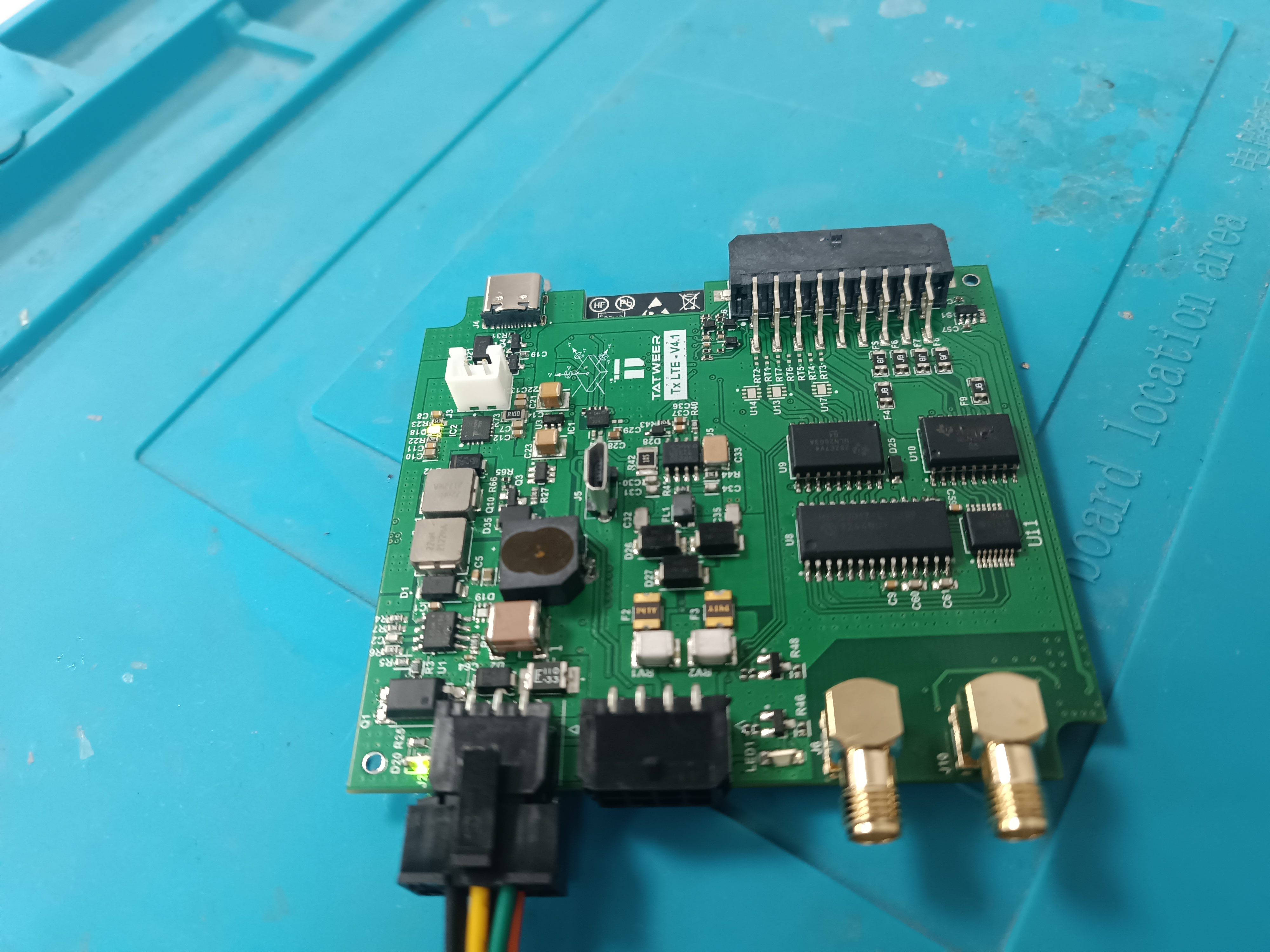
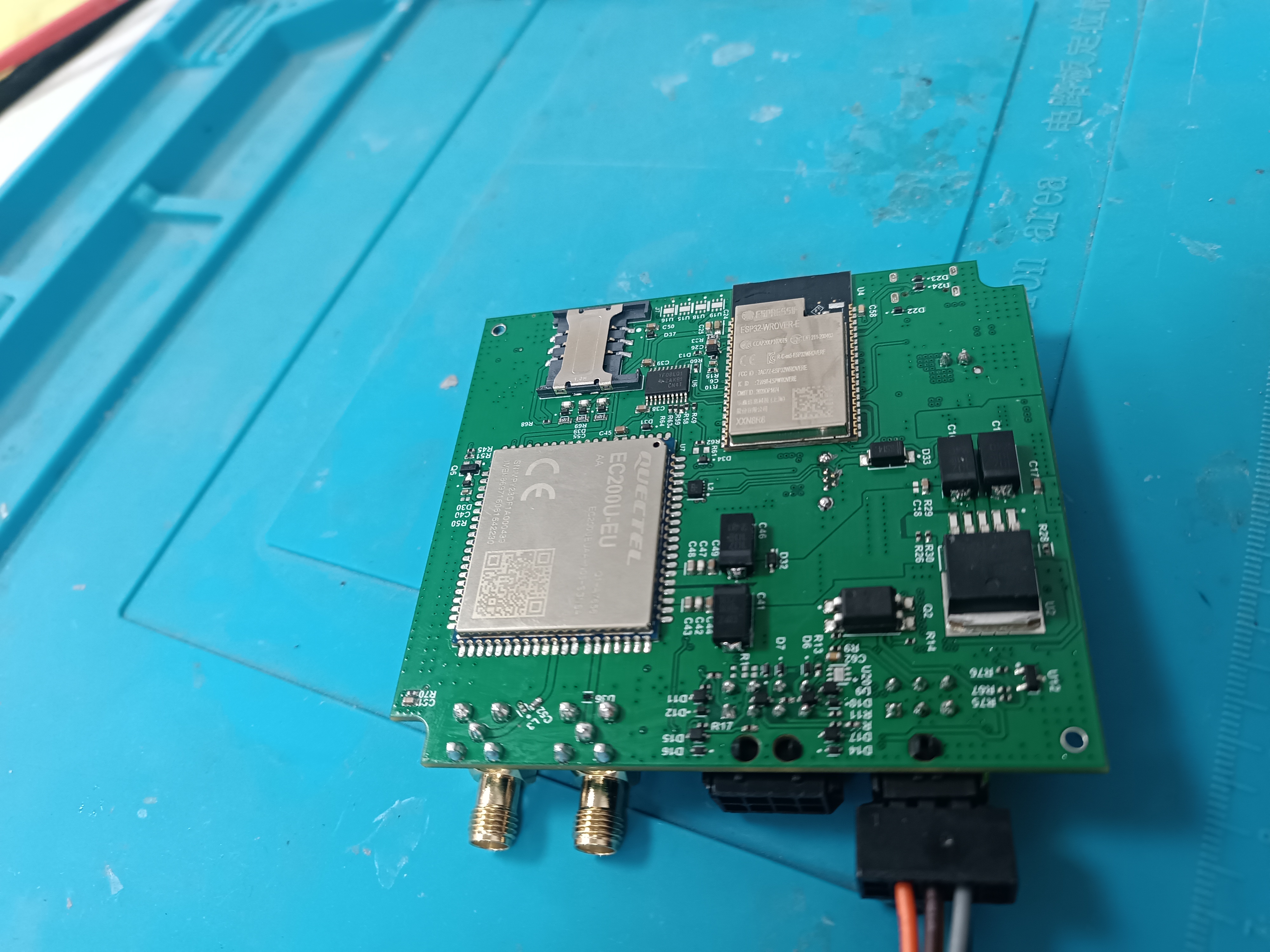
Key upgrades in V4:
- External SMA antenna connectors for GPS and cellular — improved signal performance and flexibility
- Quectel EC200UEU cellular module replacing the previous module
- USB-C port for power and firmware interface
- SIM card slot integrated on-board
- Refined compact form factor with improved connector arrangement
V4 Demo Video:
Final Version (FV) - Production Ready
- Production-optimized layout
- Comprehensive testing validation
- Manufacturing-ready design


Results & Deployment
Performance Metrics
- Deployment Scale: Successfully deployed in 500+ police vehicles
- Uptime: 99.9% system availability
- GPS Accuracy: <5 meters positioning accuracy
- Power Consumption: <50mA average current draw
- Temperature Range: Operates reliably from -40°C to +85°C (tested up to 55°C ambient)
Testing & Validation
- Automotive EMC Testing: Passed all automotive electromagnetic compatibility standards
- Environmental Testing: Validated in extreme temperature and humidity conditions
- Vibration Testing: Passed automotive vibration standards (ISO 16750)
- Field Testing: Extensive real-world deployment validation
Impact
- Enhanced fleet management capabilities for law enforcement
- Improved driver safety through behavior monitoring
- Real-time vehicle diagnostics reducing maintenance costs
- Secure data transmission enabling better decision-making
Technologies & Tools
Hardware Design:
- Altium Designer (PCB design and layout)
- PDN analyzer in Altium Designer
- Thermal simulation tools
- Signal integrity analysis
Hardware Components:
- ESP32 SoC (dual-core Tensilica LX6 processor with integrated Wi-Fi and Bluetooth)
- Quectel EC200U cellular module (Unisoc UIS8910DM SoC with ARM-based processor)
- GPS receiver modules
- CAN bus transceivers
- Automotive-grade power management ICs
Software:
- Embedded C programming (ESP32)
- MicroPython (Quectel EC200U)
- FreeRTOS real-time operating system
- OBD-II protocol implementation
- Secure communication protocols
Testing Equipment:
- Oscilloscopes and logic analyzers
- Spectrum analyzers for EMI testing
- Environmental chambers for thermal testing
- GPS simulators for validation
Key Achievements
✅ Successfully designed and deployed automotive-grade telematics system
✅ Solved critical thermal management challenge for extreme UAE temperatures
✅ Achieved 99.9% uptime in field deployment
✅ Integrated multiple communication protocols (GSM/GPRS/5G)
✅ Implemented comprehensive driver behavior monitoring system
✅ Passed all automotive EMC and environmental testing standards